Part game, part good deed, this activity reminds children to think twice before tossing trash.
Materials: a pair of non-latex gloves and a trash bag for each participant, one pair of tongs or trash grippers, optional prizes
Do you and your children walk along a road or trail where people carelessly toss their trash? Does this diminish your experience of this location? Talk to your children about going to this location to pick up trash. Outfit each person with non-latex gloves and trash bags. The person to fill a bag with the most trash receives a small reward costing under a dollar (a tumbled gemstone, a small plastic animal, or a pencil).
Remind children to avoid picking up sharp objects or broken glass. You may want to have a pair of tongs to safely pick up these items. To keep energy levels high, set a time limit (if the kids want to keep going, that’s fine; however, if you end the activity while they are still enthusiastic then they will likelier be willing to do this again).
You may want to take a picture of everyone with their bags of trash and ask the site you helped clean to post the picture. Your actions may even remind people to not litter.
This teaches children about stewardship, caring for the environment. It is also a reminder that sometimes an individual must act instead of waiting for others to meet a task.
Showing posts with label connecting nature and kids. Show all posts
Showing posts with label connecting nature and kids. Show all posts
Friday, October 14, 2011


Monday, October 10, 2011
Feelings & Nature - Connecting to Emotions through Poetry
In this quiet activity, children connect to their feelings by assigning human emotions to the different things they see around them. Children learn to describe emotions in this brief, poetic exercise.
Preparation: You will need a stack of 3” x 5” index cards. On the cards, draw simple faces exhibiting different emotions. Go online and look for emoticons if you want some ideas. Draw the face and write the emotion underneath. You’ll want to start with a deck of at least twenty emotion cards. If you are doing this activity with a large group, plan on at least two cards for each child. During the play of the game, different children can use the same card.

Hand each child one of the cards. If the child can’t read the word, ask them what emotion they think the face is showing. Explain that their goal is to look around and find something that represents the emotion on their card. If children are confused, ask them to imagine life as a rock. Would the rock feel happy, sad, or bored?
If you have a group, you can warm up to this activity by asking them to imagine if different objects had emotions what feelings they would have? In poetry, the pathetic fallacy is the practice of attaching human emotions to nature, animals, and inanimate objects. You may decide to give this brief literary lesson to preteens or teens. With younger children, this activity can lead to a discussion of how things that aren’t alive don’t have feelings.
With a small group, when a child finds an object that represents the emotion on his card, the child can call the group to stop, point out the object and then allow the others 10-to-20 seconds to guess the emotion.
Option: With a large group, you could create a list poem, in which children connect the emotion to an object they saw on the walk. This poem also uses similes, or comparisons.
For example,
As stubborn as a rock
As bored as a fence
As flexible as a twig
As calm as a leaf
Tuesday, October 4, 2011
Twisted Learning Game about Nature

This variation on Twister helps kids review a lesson in nature identification. Whether you are playing with campers, scouts, students, or your own children and their friends, kids will be learning about nature while having fun.
The preparation for this game can take a while. Have kids make the game. If you have a classroom full of kids, divide the kids into teams of four or five. Assign each team different nature images. The entire class can focus on leaves or birds or each team can gear their game for a different aspect of nature. This way the class can create several games, allowing kids to rotate to different game stations, adding to the learning challenge.
Materials and Preparations: Start by making a game board with a rectangular vinyl tablecloth or flat bed sheet. With permanent marker, fabric marker, or acrylic paint, divide the cloth into sixteen equal blocks (four rows by four columns). Next, select four images (the tracks of four different animals, leaves for four different types of trees, four different types of birds, etc) and draw them in four different boxes scattered over the game board.
Next, you’ll need to make a spinner. Take a square of cardboard and draw a circle on the board. Divide the circle into eight sections. In each section, repeat the four images from the game board. Also, label each image as hand or foot (each image will be on the spinner twice, once for the hand and the other for feet). Poke a hole in the center of the circle and attach a cardboard arrow with a paper fastener so the arrow spins with a flick of the finger.
To play, one player takes on the role as spinner, the person who spins the spinner. This will indicate to another player where to hold their hand or foot. Players maintain this position as the spinner spins again. Rotate through the players and then start back with the first player. Continue the game until one child falls. Switch players so the person who was in charge of the spinner can play the game.
Sunday, September 11, 2011
Experience the Outdoors, Don’t Just Read about It - Part Two
I’m not opposed to learning about nature from books. When I taught my first class about reptiles I went to the library and acquired a dozen books and then I went to the bookstore and bought a few more. There is a lot of general information about groups of animals that you can learn in books. I am particularly fond of learning about a topic by gathering information from children’s books – I mean here is the basic stuff you want to learn about a topic in a palatable format. Once I have an understanding of the topic, then I branch out to the adult books.

But, as I was talking about in yesterday’s blog, if you get too stuck in learning everything from books you kind of miss the point of learning about the topic. Studying, or reading, about nature in books can give you a basis of understanding what you are looking at. If you are in New England, you know the information that you read about rainforests or the Arctic doesn’t apply to the ecosystem you are in – no matter how rainy or snowy it is in the Northeast.
For kids (and adults) who memorize facts in books but never lift their head to look out a window or never take an exploratory walk in nature, they miss a big connection. You can read about a gray squirrel’s or blue jay’s behavior, but unless you experience it, the facts are flat. When you look at the way insects chew up the leaves of certain plants, the fact has more import when you look and feel those leaves.
I can read about carpenter ant nesting behaviors, but the day a tree snapped and I could watch the ants hurrying to bring the eggs and larvae to a new safe place made the facts real.
Watching a frog at a pond for 15 or 20 minutes is a different experience than diving in and grabbing it and shoving it in a critter keeper for a quarter-hour observation. I once had a group of art students draw a picture of a frog that we found in a swamp. The frog remained in the water with just its head poking out. The kids were amazed that it didn’t move. I could then bring out the book-facts – frogs don’t hop around looking for food because it would be a waste of energy.
Facts from books are important, just don’t forget to go outside and see those facts in action.
Thursday, September 8, 2011
Experience the Outdoors, Don’t Just Read about It - Part One
School starts and kids get new textbooks. They sit in the classroom on the first day and look at the neat piles of books, gathering clues as to what they will be learning about during the school year. Chances are they will make regular trips to the school library, each week to get a new book. The ‘readers’ probably didn’t get to read as many books as they would have liked over the summer (“We just went to the library a few days ago; you’ll just have to wait until I have time to take you back,” says mom/dad/babysitter.) These kids will be ecstatic to roam the shelves at school. For the kids who dread reading and do so because it is an assigned chore, the weekly library visits hold less appeal.

Some of these kids, both the kids with lots of enthusiasm as well as those who are less so, pick up books about nature. Sometimes it’s a kid who loves to read everything, but more likely it is a kid who reads into a single subject and becomes an ‘expert.’ Who wouldn’t love reading about nature? The books have lots of pictures and you learn facts that are guaranteed to gross out a few adults at the dinner table.
My problem with these books is that kids tend not to pay attention to some important facts, such as where an animal is from. I’ve had third graders on field trips ask if the sanctuary they are visiting – in New England – has black mamba snakes, jaguars, primates, and a whole host of other animals. At first, I thought kids were joking, I mean, when was the last time they saw a spider monkey hanging from the backyard bird feeder?
But, no, because they had read about these animals and how they lived in wild places and our 2000-acre suburban sanctuary seems wild to the kids, so, well, we must have Wild Animals. I remember one ten year old boy that adored snakes and was a fount of information about snakes. He would recite facts about snakes (to the point that he annoyed and bored his classmates) in a superior fashion – that I didn’t know about all of these snakes he saw as a down falling in both my intelligence and training.
However, he would run off into the shrub and come back saying that he just saw snake X – a snake that could not live in New England. At one point I saw the common garter snake he was chasing after, but he identified it as something more exotic. His classmates looked at me with some anxiety as I explained the identity of the snake; all while their fellow student argued.
I named the snakes that lived in Massachusetts and told this boy that those were the animals that he could choose from when trying to determine which animal he saw. Oh, but he had read about these other snakes and he knew I must be wrong …. (continued)
Tuesday, September 6, 2011
Fall into Beginning
Fall is a time to wrap things up. Woodchucks snatch the last mouthfuls of green grass before heading into hibernation. Squirrels and chipmunks continue their wild run to store food for colder weather. Gardeners and farmers start thinking of final harvests.
Yet while some things are winding down, autumn is also a season for starting things. Kids start a new grade. No matter what month their birthdays, fall is like another birthday; instead of announcing a new age, they get to announce their new grade. September or October is also Rosh Hashanah, the Jewish New Year. Unlike the secular New Year, there are no drinking binges and party hats. However, there is some introspection – what mistakes have been made in the past year and what changes will be incorporated into the New Year?
Even if you aren’t Jewish, you can use the changes of the season, not to mention the start of the school year, as an opportunity to plan some ‘fall cleaning.’ You can connect this contemplation to the environment – Is the lunchbox filled with plastic bags that get tossed each night? How could you change that? Maybe you don’t spend much time outside; consider how you and your children can get outdoors more often.
This doesn’t have to be a parent-directed edict, one more thing that you tell your children they can change. Instead talk together about what you observe in nature and consider how you can incorporate change into your lives. Unlike the January 1st resolution, try to make a promise to include something in your life instead of merely trying to eliminate things and make this a more positive experience.

Thursday, September 1, 2011
Do You Close Your Eyes in Nature?
It is all too easy while walking to get caught up in one’s thoughts or in a conversation with whomever you are walking with. If you’ve ever had that heart-leaping feeling when you suddenly become aware of your surroundings but can’t remember how you got there then you know what I mean. This isn’t something that only adults do.
I remember one time at work allowing a group of homeschoolers to lead a walk. I didn’t tell them that they were leading the walk. I didn’t really plan this; we were walking and exploring, so it didn’t really matter where we went. They stopped at the edge of the nature center’s front yard and looked both ways before crossing the street. Some of the kids who were walking next to me asked, “Is that the direction we’re going?” I said, “It is now.”
 I was the sole adult with ten or so kids, many who’d taken my science and nature classes for a year or two. We ended up dividing into two groups. The group to the front was deep in a conversation. Although they acknowledged diverging paths by stopping, someone in that group would inevitably select the route to take, glance back to see that I and the rest of the group was following and continue ahead.
Of course, the kids walking with me thought that this was hilarious. Although the kids in the lead were familiar with the trails, it was winter and the few inches of snow on the ground had obliterated this less traveled path. At one point, I commented to the group close to me that we were no longer on the trail. They were, of course, a bit concerned that we were lost; but, I knew that we were between two parallel trails and would come upon one of them soon.
The group near me started wondering when the chatting students in the forward group would notice that we were no longer on a trail. The fact that they had been walking for 30 minutes without a destination hadn’t bothered them, but wouldn’t the lack of a trail.
Twenty minutes later, the lead group stopped. We were just 20 or 25 feet behind them so we caught up in a few steps. One student proclaimed, “I think we’re lost. Where are we going by the way?” The kids walking with me broke up laughing. Within five minutes we found the trail. The walk was a bit longer than ‘planned’ but it taught an interesting lesson.
Know where you are going. Whether you are walking in a city or a suburban neighborhood, you’ll get directions so you can go from one place to the next. The number of people who head out without a map into a forest is astounding. When they call on their cell phone they are usually left fumbling as they try to describe their location and get directions back to the parking lot.
So, a couple of things when you set out on a walk, one, know where you are going – will you encounter steep hills, uneven footing, seasonal flooding? Two, pay attention to your surroundings. Don’t get so caught up in thoughts or conversations that you miss trail or street signs.
Glance around and see where you are. Get kids in the habit of stopping and playing observation games. They aren’t just to slow the pace but to train kids (and adults) to notice where they are. At one level, your walks will be safer. On another level, they will be more enjoyable as you notice where you are.
I remember one time at work allowing a group of homeschoolers to lead a walk. I didn’t tell them that they were leading the walk. I didn’t really plan this; we were walking and exploring, so it didn’t really matter where we went. They stopped at the edge of the nature center’s front yard and looked both ways before crossing the street. Some of the kids who were walking next to me asked, “Is that the direction we’re going?” I said, “It is now.”

Of course, the kids walking with me thought that this was hilarious. Although the kids in the lead were familiar with the trails, it was winter and the few inches of snow on the ground had obliterated this less traveled path. At one point, I commented to the group close to me that we were no longer on the trail. They were, of course, a bit concerned that we were lost; but, I knew that we were between two parallel trails and would come upon one of them soon.
The group near me started wondering when the chatting students in the forward group would notice that we were no longer on a trail. The fact that they had been walking for 30 minutes without a destination hadn’t bothered them, but wouldn’t the lack of a trail.
Twenty minutes later, the lead group stopped. We were just 20 or 25 feet behind them so we caught up in a few steps. One student proclaimed, “I think we’re lost. Where are we going by the way?” The kids walking with me broke up laughing. Within five minutes we found the trail. The walk was a bit longer than ‘planned’ but it taught an interesting lesson.
Know where you are going. Whether you are walking in a city or a suburban neighborhood, you’ll get directions so you can go from one place to the next. The number of people who head out without a map into a forest is astounding. When they call on their cell phone they are usually left fumbling as they try to describe their location and get directions back to the parking lot.
So, a couple of things when you set out on a walk, one, know where you are going – will you encounter steep hills, uneven footing, seasonal flooding? Two, pay attention to your surroundings. Don’t get so caught up in thoughts or conversations that you miss trail or street signs.
Glance around and see where you are. Get kids in the habit of stopping and playing observation games. They aren’t just to slow the pace but to train kids (and adults) to notice where they are. At one level, your walks will be safer. On another level, they will be more enjoyable as you notice where you are.
Monday, August 8, 2011
Keep a Nature Notebook
With school supplies hitting the stores, often at lower prices than you’ll find the rest of the year, consider purchasing an extra notebook or two for nature notes.

A nature notebook can be as detailed or as simple as desired. The age of the child, their writing skills, and their overall schedule are factors that determine how much time the child can give to a nature journal. But, why keep a nature journal? It makes you more aware of nature – if kids know that they’ll be writing or drawing something that they saw during the day, they will make a point of paying attention during the day to things that they can include in the notebook.
Keep the notebook beside the child’s bed along with a pencil, pen, or favorite drawing supplies. Use the five or ten minutes before lights out to encouraging your child to list one-to-five things they observed in nature that day, draw a picture of something they saw, or write a story about what they saw. This calming activity can become a habit the child looks forward to after just a few days of practice.
Write the day, date, and year at the top of the page, everyday.
Make each day’s entry on a new piece of paper. If the child writes small, then they can use a page to hold a few entries, just be certain to start each entry with the date.
If desired, include information about the weather, what the child did during the day, etc. that sets the stage for the observations.
Use words or images or both to describe something the child observed in nature. Younger children can get an adult’s assistance while older children can fill the page on their own.
Keeping a nature journal encourages observation, writing and spelling skills, and a connection to nature with an awareness of the seasons.
Wednesday, August 3, 2011
15 Minutes Outside

Whether you are at home or on vacation today, go for a walk with your child. It doesn’t have to be a lengthy walk – 15 minutes will do; and you don’t have to go anywhere ‘special’ for this walk. One of the goals of the walk is to remind yourself and your children that nature isn’t ‘out there’ – some place that takes effort to get to, a place that by some definition is ‘nature.’
Today, walk around the neighborhood and name ten wild things that you and your children can see, hear, feel, or smell. Yep, even if you are taking a 15 minute walk, notice ten things in nature – a crow flies overhead, the rough bark of the tree along the side of the road, crickets chirping, the smell of fresh cut grass, etc.
The time limit, layered onto the simple observation activity, forces you and your children to pay attention to your surroundings. Even if you were going for an hour-long walk, you wouldn’t be able to keep up the intensity of observation. Instead, you’d drift into conversations about schedules and other activities that you’ve done or will do.
After fifteen minutes, you’ll return home full of your experience in nature. Although there may be more trees in the forest, your children will have felt the bark, noticed the shape of the leaves, and seen the birds perching on the branches of the trees you walked past. Nature is everywhere.
Tuesday, August 2, 2011
Make a Bucket List for Nature
Transform the idea of writing a bucket list, a list of the things you want to do before you die, to a kid-friendly, nature-inspired task. Whether your children are preschoolers or preteens, you can encourage your children to create a list of things they would like to experience in nature. For preschoolers, you may ask them what nature activities they would be interested in doing that day or that week. Older children and preteens, who have a better sense of the passage of time, could make lists of what they want to do during a particular season, the upcoming year, or
before they graduate from high school.

This activity can give you ideas for things to do with your child. You’ll also get a better sense of their interests. If your ten-year-old gets bored on walks and yet lists activities such as rock climbing, camping, and kayaking on his bucket list, you know you have a child who enjoys the outdoors – as long as the time includes active, challenging pursuits.
Encourage your child to list specific places they want to go to. This will create an opportunity to learn more about your child and discover what draws them to these locations. If your child is drawn to waterfalls are there some (even small waterfalls) within driving distance? Make your own list and share it with your child. Together you can plan places to go and activities to try. This may guide you toward sending your child to an active camp where they can sample all sorts of recreational pursuits. Or, you may realize that your child is happiest taking photographs of the backyard and neighborhood.
Although you may not be able to help your child do the things on their bucket list in the time frame they would like, by having them state the things they are interested in, you will both become more aware of opportunities to help them meet those goals.
Monday, August 1, 2011
Explore the Backyard

You and your kids will need a backyard for this activity. Even if you live in an apartment, chances are there is some small patch of trees and/or shrubs and maybe even a bit of grass. Don’t discount that patch of greenery.
Oftentimes, we overlook the things closest to us, and that includes nature. Granted a patch of grass shaded by a tree isn’t the same as local conservation land with paths leading you through acres of forests, fields, or wetlands, but you can still explore.
• Give kids a magnifying glass for getting an up close view of insects, seeds, soil, leaves, flower parts, etc.
• A collection jar with holes doesn’t cost a lot of money (check dollar stores) and gives kids the chance to hold onto insects, worms, and small frogs for a short period, giving them the opportunity to examine the creature. Keep the creatures out of direct sun and release them after ten-or-fifteen minutes.
• A white pillow case or piece of fabric will allow kids to set their discoveries – including crawling insects – on the ground while providing maximum contrast.
• Paper and crayons, markers, or watercolors encourages children to take a closer look at their discoveries as they create a journal entry or create a picture.
• A digital camera also encourages exploration, particularly if you challenge a child to take a certain number of photographs of their surroundings.
• With kids ages 8-or-9 and up, you might want to supply some “First” field guides that can help the children to identify the trees, flowers, or insects around them. Trying to identify aspects of nature is something like solving a mystery – can the children notice enough clues that will lead them to the correct conclusion.
Don’t worry if kids don’t stay “on task” by accomplishing some specific exploration. Get them outside with a hook, “Can we find any caterpillars in the garden?” and then watch them discover the things that most interest them.
Friday, July 29, 2011
Enjoy Summer While It's Still Here
The commercials for back-to-school clothing and supplies have already been playing on television for a couple of weeks. It seems too soon, but schedules will only get busier with school and extracurricular activities on the horizon. Create some memorable outdoor experiences with your kids.
• Have the kids eat breakfast outside. Outside can be the front stoop, a porch, a patch of grass beneath a tree. Breakfast can be simple – muffins and juice, Canadian bacon between a couple of waffles. Bring a thermos of coffee for yourself.
• Take a walk around the neighborhood … when it is raining.
• Collect leaves or flowers and press them between the pages of a dictionary.
• Go to a farmer’s market. Give each child one dollar to make a purchase of something for dinner.
• Count the number of birds that visits your feeder over five or ten minutes.
• Have a picnic lunch or supper in the backyard, at the park, at the beach, at the local forest.
• Read a bedtime story outside by flashlight as the day’s light fades.
• Lie on blankets and watch the stars come out.
Outdoor time doesn’t have to involve elaborate experiences but simple moments when everyone is present in the activity.

Thursday, July 28, 2011
Nature Play Along the Way for All Ages
In 1997 I entered the field of environmental education as a field trip leader for a 2000-acre suburban wildlife sanctuary. As I sat through the training, I realized that third graders knew more about the natural world than I did. As a kid I rode my bike up and down the street for endless hours. As a preteen, I walked with a friend around the field that was her backyard. Aside from worrying that snakes were going to bite me, I didn’t give much thought about nature.

As an adult though, a new world opened up as I joined nature walks and learned the names of small green plants and shrubs and trees. I learned about the secret worlds of amphibians and arthropods, birds and mammals. The more I read and the more I learned in informal classes and workshops, the more things made sense. Instead of facts, nature was a story. People and plants and animals and even rocks were interconnected.
Teaching classes helped me to process what I learned. However, working with kids isn’t just about conveying facts. It is about getting them to interact with nature. So, as I became involved in the day camp at the wildlife sanctuary I started reading books describing activities adults could guide kids through outdoors.
I collected hundreds of activities and variations on those activities. I kept meaning to turn them into a book, but the format was never clear – should I gear the book for kids, for parents, for teachers … who? Every time I sat down, I tweaked the format and my notes became more and more disorganized. During that time, my mother required more help and then spent years going in and out of hospitals and nursing homes until she died; my work schedule changed and then changed again (and then changed again); I moved three times in three years after previously living at one address for years and years; I met a man, fell in love, and married him; I changed my career from teacher to writer; I helped my father get by living on his own until he had to move into assisted living, which hasn’t yet made things easier because now I’m cleaning the house – and my parents never got rid of anything (even empty boxes).
Before the end of September, my Nature Play Along the Way series will be e-published and available through BarnesandNoble.com. The series will consist of
Games on the Go – Walking Games for Parents and Kids
Nature Play Along the Way for PreK – K
Nature Play Along the Way for Grades 1 & 2
Nature Play Along the Way for Grades 3 & 5
Nature Play Along the Way for Teachers (Activities that require eight or more kids)
Each book guides adults, be they parents, grandparents, teachers, scout leaders, youth group leaders, camp counselors, or afterschool teachers through nature activities that they can do with children, even if the adults don’t have a background in environmental education, science, nature, etc.
Why mention the books now? Well, as I mentioned, I’ve been working on the books on and off for years and I need an incentive to finish them. Telling ‘the world’ is (with hope) that push I need to write, revise, and edit this series. So, get set to explore ….
Monday, July 25, 2011
Walking Games with Kids
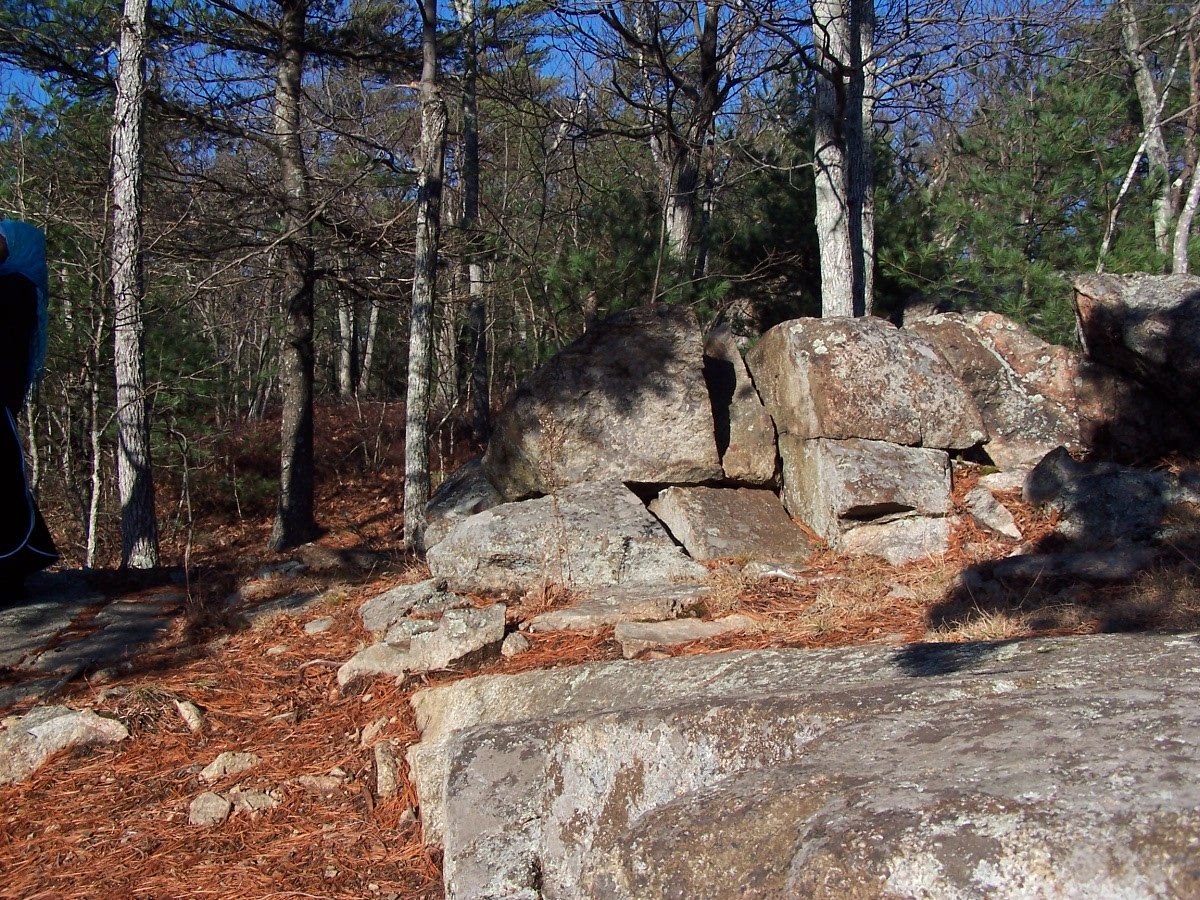
Whether you’ll be walking in the wood, through a park, along a city or suburban sidewalk, or, perhaps, through the mall, these walking games will engage young children. If older children think the game is too silly, then have them take turns leading the game or place them in charge of younger siblings.
Animals on the Move
Have the children pretend to be animals while walking from one spot to the next. At the beginning of this game you can select one or two animals and call them out randomly. Children must then act out that animal’s behavior for ten-to-fifteen seconds.
Fox – Red fox “perfect step,” which means that all four feet move in a single line and that the back feet step in the prints left behind by the front feet. Have the children walk placing one foot in front of another in a straight line.
Rabbit – Hop with feet together.
Hawk – Hold arms out to the side and pretend to soar.
Ant – Crawl along the ground in a straight line.
Geese – Try to walk so all participants are moving in a v-shape.
After introducing each animal and calling out the actions for the children to act out, you should be able to call out the animal’s name at any time and the kids should respond.
Animal Antics
This version allows for more random actions. If you are walking with children who are arguing about who gets to walk at the front of the line, this activity will eliminate the pushing and shoving by rotating the children from the front to the back of the line. Start by telling the children that when the leader make an animal sound, they must then act out the behavior of that animal for a count of ten while continuing to walk.
Select a child to be the leader. Point out a spot up ahead and tell the child that when the group reaches that point she should make an animal sound. (Why point out a place for the child to make the call? Depending on the child’s age, she may make an animal sound immediately upon it becoming her turn and then the group doesn’t get to move very far.) When the group hears the animal sound, they then act out the behavior they believe most appropriate. Rotate leaders.
The challenge with this game is encouraging the children to make the sound loud enough for the other children to hear. As the leader, you can help support the child-leader by encouraging them to repeat the sound as they turn to face the other children.
Now, get walking!
Wednesday, July 13, 2011
Nature Word Games for Kids

This word game relies on pathetic fallacy (a phrase that kids ages nine or ten and up will love to learn because it sounds so odd). Pathetic fallacy is the granting of human emotions to non-human things. When we say the flowers look happy or a scrawny tree seems sad, we are casting human emotions on the things.
For this activity you will need a stack of 3” x 5” index cards. On the cards, draw simple faces exhibiting different emotions. Go online and look for emoticons if you want some ideas. Draw the face and write the emotion underneath. You’ll want to start with a deck of at least twenty emotion cards. If you are doing this activity with a large group, plan on at least two cards for each child. During the play of the game, different children can use the same card.
Hand each child one of the cards. If the child can’t read the word, ask them what emotion they think the face is showing. Explain that their goal is to look around and find something that represents the emotion on their card. If children are confused, ask them to imagine life as a rock. Would the rock feel happy, sad, or bored?
If you have a group, you can warm up to this activity by asking them to imagine if different objects had emotions what feelings they would have? In poetry, the pathetic fallacy is the practice of attaching human emotions to nature, animals, and inanimate objects. You may decide to give this brief literary lesson to preteens or teens. With younger children, this activity can lead to a discussion of how things that aren’t alive don’t have feelings.
With a small group, when a child finds an object that represents the emotion on his card, the child can call the group to stop, point out the object and then allow the others 10-to-20 seconds to guess the emotion. With a large group, you could create a list poem, in which children connect the emotion to an object they saw on the walk. This poem also uses similes, or comparisons.
For example,
As stubborn as a rock
As bored as a fence
As flexible as a twig
As calm as a leaf
This activity connects a child to their own emotions as well as encourages empathy toward other things (and people).
For more word fun, try Writing Activities for Kids who Don't Like to Write and Write and Illustrate a Book of Poetry with Kids.
Thursday, June 23, 2011
Make a Flower Chain

A child wearing a headband or necklace of interlocked daisies just seems to symbolize carefree summer. Although it takes a bit to get used to interlocking the flowers, children with good fine motor skills (they can tie their own shoes with ease) can learn the process. Younger children can pick the flowers. Just be warned – you probably won’t be able to work fast enough if you have more than one child waiting!
You want a flower with a stem that you can easily slit with your thumbnail. The stem should also be flexible enough to bend without it crooking into a sharp angle. The shorter the stem, the more flowers you’ll need, setting the blossoms close together.
With your thumbnail, cut a slit through the stem. Next, slide the stem of another flower through the slit. The blossom of the second flower should stop at the slit of the first flower. Continue until the piece is as long as desired. To finish off the chain and bring it into a loop, make a larger slit in the last stem and fit it over the first flower. That’s it!
Tuesday, June 21, 2011
Welcome Summer!

Although we look at the first day of summer with anticipation of longer, warmer, sunnier days; more time outdoors; and relaxing or stimulating vacations (and summer camp for kids) – the irony is that the Summer Solstice hails the start of shorter days.
Try this bit of sympathetic magic with your children during this season when schedules change and (perhaps) we have a bit more time. If the idea of magic brings up negative thoughts, consider this a prayer or even a following of the season’s pattern.
You and your children can each think of something in your life that makes you dissatisfied. Maybe the messy state of your child’s bedroom causes arguments. Ask your child to state a goal, “As the summer days dwindle, so does the mess in my bedroom.” Perhaps you say, “As the summer days dwindle, so do my harsh words about your bedroom.” (The two goals do not have to be related.)
Next, decide on a positive action to get this goal rolling. Now, cut that goal in half (so instead of “Clean my room for an hour,” make the statement “Clean my room for half an hour). If this goal still sounds difficult, keep cutting it in half until you laugh with how simple it will be to keep this goal. (“Clean my bedroom for sixty seconds before dinner every day.” “Eliminate my nagging to a single word reminder, ‘room’ fifteen minutes before dinner.”)
Go out into the sun and feel the energy of the sun’s rays energizing your goal. You could also write or draw a picture of the goal and then burn it on the barbecue or fire pit. Toast and eat a marshmallow cooked over the flames created from the paper listing your intent to banish something negative from your life.
Kids may find this magical way of working on a problem different enough that they manage the task. Happy First Day of Summer!
Monday, June 20, 2011
Finding Peace of Mind in Nature

I’ve spent the last week and a half coping with my father going from the hospital to a nursing home. This has been an opportunity for me to clean through 37 years of stuff … in many cases because I need to get my hand on a document or item.
This stress has meant that I haven’t spent much time outdoors; in some cases, I didn’t even look out a window for hours. I pushed myself this weekend to make time for my walk. I have to admit that there is so much stuff going on in my head (to do lists, questions for the nursing home) that I walked but saw nothing. Today, my head cleared for moments so that I actually noticed squirrels and birds and insect-chewed maple leaves.
Encourage your children, whether they are two or twelve, to discover that nature can be a refuge for confusing feelings. While teaching them this, you too will develop this habit if you do not already possess it.
Don’t wait for your child to experience turmoil over an argument with a friend or a bad grade or another disappointment. Practice this stillness activity when your child is in a happy or relaxed mood so they will be receptive to the activity.
Activity 1: Find a quiet spot where there is someplace to sit – lush grass, a boulder, a log. Sit so you cannot touch anyone else in the group, giving each individual their own space. Move no body part but your neck, which will allow you to turn your head from side-to-side. Announce that everyone will sit still and observe for thirty seconds or five minutes or whatever works for the child’s age and temperament. That’s it. After the allotted time, stand up and walk a bit. If desired, everyone can discuss what they observed.
Activity 2: For a more active experience, each person walks without speaking to anyone. Set your feet quietly on the ground, trying to pass silently until you reach that rock up ahead on the path or for a set amount of time.
Both activities encourage observation and, perhaps, a bit of quiet reflection. When you child is used to the activities, and you know he or she is sad or disappointment, encourage the child to go outside, even if it is in the backyard, as opposed to allowing your child to brood in their bedroom. Your child may or may not feel better outside, but it is worth the try to get them to notice what is around them and not just what is going on inside their head.
Monday, June 13, 2011
Learn about Leaves with Leaf Art
Turning leaves into art makes children much more aware of the shapes of the leaves. For children eight or ten years old and older, this awareness can be a first step toward learning to identifying the trees around you. Is it necessary to know the types of trees in your area? No, but learning their names is like learning the name of a person you walk by every day.
Leaf Rubbings
Materials: paper and crayons
Set a leaf on a table, vein side up. Cover with a piece of photocopy or lightweight drawing paper. Peel the paper off a crayon. Lay the crayon on its side and rub over the paper. The texture of the leaf will appear.
Leaf Silhouettes
Materials: paper, paint, and brush
This time, set the leaf on top of a sheet of watercolor paper construction paper will work as well). Dip the brush in paint (it doesn’t matter whether it is watercolors, poster paints, tempera paints, etc). Hold the leaf in place with one hand. Brush the paint from the edge of the leaf and onto the paper. If you start on the leaf and paint outward, you will get a crisp silhouette when you pick up the leaf. Replace the brush for a sponge for a different look.
Leaf Printing
Materials: paper, paint, brush, scrap paper
On scrap paper, paint the vein side of a leaf (use poster paint or tempera, watercolors will be too light). Keep the layer of paint thin. Lift the leaf and set it on top of construction paper or another paint that will hold up to paint. Place the painted side onto the paper. Cover with more scrap paper and then run your hand over the paper. When you remove the scrap paper and the leaf, the impression of the leaf will remain on the paper.
These are fun projects to do with kids whether you collect your leaves in your backyard or on a nature walk.

Friday, June 3, 2011
Pick up that Stick!

When walking along with a group of children, you’ll almost never hear me tell children to pick up sticks. Usually, I’m trying to avert having one child accidently hitting another child with a stick so you’ll hear me say one (or ten) times, “Stick down.” Kids always want hiking sticks, which I tell them are fine if they are walking with their family but not in a group of twelve-to-fifteen individuals. I can just envision some kid tripping over someone else’s walking staff. (On occasion, when I know the kids better than those on a two-hour field trip, I have allowed hiking sticks.)
Kids can play a lot of games with small sticks, those as long as the child’s forearm from wrist to elbow. Children can pick up fallen sticks and use them to build log cabin-like structures on a clear patch of ground. Natural sticks also provide a greater challenge for a game of pick-up sticks. Kids will think it’s silly to use real sticks as Lincoln Logs or pick-up sticks.
Children can also “write” their names or words with sticks or try creating other images with an assortment of branches so to get some different colors. Place two sticks opposite one another and encourage children to pretend they are jumping over a stream, as defined by the sticks. Keep moving apart the sticks, as the child continues to challenge himself. Try other Games Played with Sticks for Indoor and Outdoor Fun. Sticks are a free toy that are a bit like the boxes that house presents … they are an open-ended toy that supports a variety of creative play opportunities.
Subscribe to:
Posts (Atom)